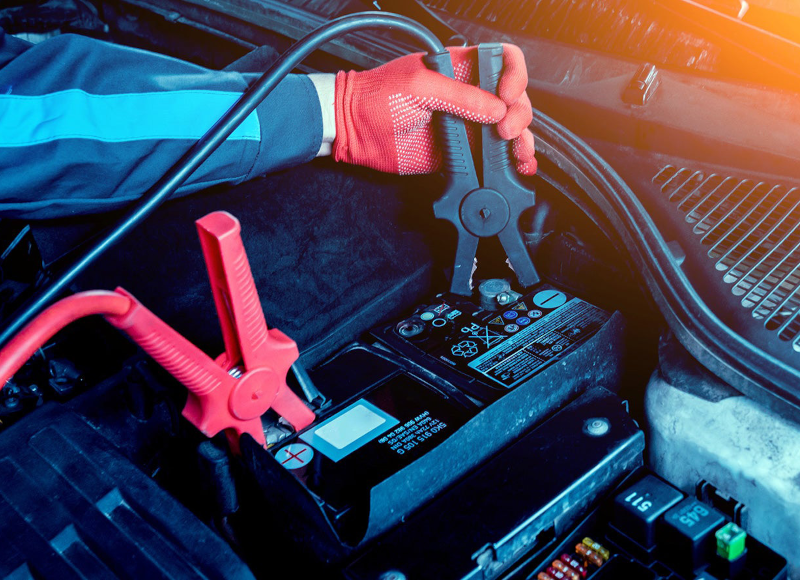
If your Ford battery keeps dying, the cause may be an aging battery, a failing alternator, an electrical component draining power while the vehicle is parked, or a problem with the charging system. A battery that repeatedly needs a jump-start does not necessarily need replacement, especially if another electrical problem is preventing it from maintaining a charge. For Ford drivers in Sumner, WA, understanding these common causes can help you recognize warning signs and determine when to schedule a professional battery and charging system inspection.
Schedule Ford Battery Service View Service Specials
Why Does My Ford Battery Keep Dying?
The most common reasons a Ford battery repeatedly dies include battery deterioration, charging system problems, excessive electrical drain, and insufficient charging during short trips. Each problem can produce similar symptoms, but the appropriate repair depends on the underlying cause.
For example, your Ford F-150 might start normally after a jump but struggle again the following morning. Or your Ford Escape might show a battery warning light while driving along Highway 410.
Although these situations can both involve the battery, they may have different causes. A professional inspection can help determine whether the battery is failing, the vehicle is not charging properly, or an electrical component is drawing excessive power.
1. An Aging or Weak Ford Battery
Car batteries gradually lose their ability to store and deliver electrical energy. Eventually, an older battery may no longer provide enough power to start the engine reliably.
Many conventional vehicle batteries last approximately three to five years, although actual lifespan depends on driving habits, temperature, battery type, and maintenance.
Common signs of a weak battery include:
- Slow or sluggish engine cranking.
- Repeated clicking when attempting to start the vehicle.
- Interior lights dimming noticeably during startup.
- Needing frequent jump-starts.
- Difficulty starting after the vehicle has been parked.
- Electrical accessories behaving inconsistently.
These symptoms are not exclusive to a failing battery, but they provide useful information for diagnosing the problem.
Cold mornings around Bonney Lake and Enumclaw can make an already weakened battery more noticeable because low temperatures reduce available battery performance while increasing the demands of starting an engine.
What to do: Have the battery tested before replacing it. A technician can evaluate its condition and determine whether it still provides adequate starting power.
2. A Failing Alternator or Charging System
In most gasoline-powered Ford vehicles, the alternator generates electricity while the engine is running. It supplies power to electrical systems and helps recharge the 12-volt battery.
If the alternator or another charging system component begins failing, the battery may gradually lose power even while you drive.
Warning signs of a possible charging system problem include:
- A battery or charging system warning light appearing while the engine is running.
- Headlights becoming unusually dim or changing brightness.
- Electrical accessories malfunctioning.
- A battery that repeatedly loses its charge despite testing in acceptable condition.
- The engine stalling or the vehicle losing electrical power.
For example, if your Ford starts after a jump but later stalls during a drive between Sumner and Lake Tapps, a charging system problem may be responsible.
However, these symptoms can also result from wiring problems, poor electrical connections, or other faults. An alternator should not be replaced without confirming the diagnosis.
If a charging warning appears while driving, find a safe place to stop and follow your owner's manual. If electrical systems are failing or the engine stalls, arrange roadside assistance rather than continuing to drive.
Dead Battery vs. Bad Alternator: How Can You Tell?
A weak battery and a failing alternator can create overlapping symptoms. The following comparison highlights common patterns, although testing is necessary for an accurate diagnosis.
| Symptom | Possible Battery Problem | Possible Charging System Problem |
|---|---|---|
| Slow engine cranking | Common | Possible if battery is not recharging |
| Repeated jump-starts | Common | Also possible |
| Battery warning while driving | Possible | Often indicates charging system concern |
| Headlights dim while engine runs | Possible | Possible charging issue |
| Starts but later stalls | Possible | Potential charging system failure |
| Dies after sitting overnight | Possible weak battery | Could also involve an electrical drain |
A battery test evaluates the battery's condition, while a charging system test checks whether the vehicle is supplying the electrical power it needs. In some situations, both tests are necessary to identify the underlying problem.
3. Parasitic Battery Drain: Why Does My Ford Die Overnight?
Parasitic battery drain occurs when an electrical component continues drawing more power than expected after the vehicle has been turned off.
Modern Ford vehicles use multiple electronic control modules, sensors, and connected features. Some electrical activity after shutdown is normal, but excessive current draw can discharge the battery while the vehicle is parked.
Potential causes include:
- Interior, cargo, or glovebox lights remaining illuminated.
- Aftermarket dash cameras or electrical accessories drawing power.
- Faulty relays or electrical modules.
- Damaged wiring or electrical connections.
- An electronic component that fails to enter its normal low-power state.
For example, a Ford Explorer parked overnight in a driveway in Sumner might start normally one day but have insufficient battery power the following morning.
If the battery tests in good condition and the charging system operates correctly, a technician may perform a parasitic draw test to determine whether an electrical component is consuming excessive power while the vehicle is off.
Replacing the battery without correcting an ongoing electrical drain may result in the same problem returning.
4. Frequent Short Trips and Low Battery Charge
Short trips can also contribute to battery problems, particularly when a vehicle makes repeated starts without spending enough time running to replenish the energy used.
For drivers making frequent short trips around Sumner or Bonney Lake, the charging system may not always restore the battery to a sufficient state of charge between starts.
This can become more noticeable when using electrical features such as heated seats, window defrosters, lighting, and other accessories.
Several factors influence how much charging occurs, including engine operating conditions, electrical demand, battery condition, and the vehicle's charging management system.
Occasional short trips are normal, but a pattern of repeated low-charge conditions should be evaluated. A weak battery or charging system problem can make the situation worse.
5. Corroded Battery Terminals or Loose Connections
A healthy battery may still have difficulty delivering electrical power if its terminals or cables are damaged, loose, or corroded.
Corrosion can interfere with the electrical connection between the battery and the vehicle. Loose connections may also cause intermittent starting problems or electrical issues.
Common warning signs include visible corrosion around battery terminals, intermittent starting difficulties, and inconsistent electrical behavior.
A technician can inspect the battery connections, cables, and related components to determine whether cleaning, tightening, or replacement is needed.
Drivers should avoid handling damaged or leaking batteries without appropriate safety precautions. Battery acid and electrical components can present injury hazards.
6. Battery Monitoring Systems and Replacement Requirements
Many newer Ford vehicles use a Battery Management System that monitors battery conditions and helps manage charging and electrical demand.
On certain Ford models, battery replacement may require a battery monitoring system reset or other manufacturer-specified procedures.
Installing the wrong battery type or capacity may also affect vehicle operation. Some Ford vehicles equipped with Auto Start-Stop technology require batteries designed for their electrical demands.
Because these requirements vary by model and year, it is important to select a replacement battery that meets the vehicle's specifications.
At Sunset Ford of Sumner, our service team can help identify the appropriate battery and determine whether additional procedures are required after installation.
What Should You Do If Your Ford Won't Start?
If your Ford fails to start, the following observations may help explain the symptoms to a service technician.
- Listen when starting: Slow cranking or repeated clicking may indicate insufficient electrical power, although other starting system problems are possible.
- Look for warning messages: Note any battery, charging system, or electrical warnings displayed on the dashboard.
- Consider recent driving: Frequent short trips or extended periods without driving can contribute to low battery charge.
- Check for obvious electrical issues: Interior lights or accessories left on may have discharged the battery.
- Remember when the problem started: Recent battery replacement, accessory installation, or electrical repair may provide useful diagnostic clues.
If jump-starting is appropriate, follow the procedures in your Ford owner's manual. Battery access points and jump-starting requirements differ by model, particularly for hybrid and electric vehicles.
Never disconnect a battery cable while the engine is running to test the alternator. Doing so can create electrical hazards and potentially damage vehicle electronics.
If the vehicle repeatedly loses power, schedule an inspection instead of relying on continued jump-starts.
How Does Sunset Ford Diagnose Battery and Electrical Problems?
When a Ford repeatedly loses battery power, identifying the cause can involve more than installing a replacement battery.
Depending on the vehicle's symptoms, a technician may recommend:
- Battery condition testing: Evaluating battery health, charge level, and starting capability.
- Charging system testing: Checking charging performance and related components.
- Battery terminal inspection: Looking for corrosion, loose cables, and poor electrical connections.
- Electrical system diagnostics: Checking relevant fault codes and vehicle systems.
- Parasitic draw testing: Investigating excessive electrical consumption after shutdown.
The appropriate tests depend on the symptoms and vehicle configuration. A professional diagnosis helps distinguish between a battery that needs replacement and a separate issue that is causing the battery to discharge.
When Should You Schedule Ford Battery Service?
Consider scheduling a battery and charging system inspection if your Ford:
- Needs more than one jump-start.
- Cranks slowly or struggles to start.
- Displays a charging system warning.
- Repeatedly loses charge while parked.
- Has visible corrosion or damaged battery connections.
- Experiences recurring electrical problems after battery replacement.
Persistent battery problems can eventually leave you stranded. Addressing the symptoms before the vehicle becomes inoperable can help identify the issue under more convenient circumstances.
Our Ford service department in Sumner can assist with battery testing, inspections, and electrical diagnostics. You can also check our current service and parts specials for applicable maintenance offers.
Frequently Asked Questions About Ford Battery Problems
Why does my Ford battery keep dying even after I replace it?
If a new battery repeatedly loses its charge, the problem may involve the charging system, parasitic electrical drain, poor connections, or an incorrect battery installation or specification. A diagnostic inspection can help determine the cause rather than assuming another replacement is necessary.
Can a bad alternator drain my Ford battery?
Yes. A malfunctioning alternator may fail to recharge the battery adequately while the engine is running. Certain alternator faults can also contribute to unwanted electrical drain when the vehicle is parked.
Why does my Ford battery die after sitting for two days?
A battery that loses enough charge to prevent starting after only a short period of parking may be weak, insufficiently charged, or affected by excessive electrical drain. Battery and electrical system testing can help distinguish these possibilities.
How long should a Ford car battery last?
Many conventional 12-volt vehicle batteries last approximately three to five years, but lifespan depends on battery type, climate, driving conditions, and electrical demands. Battery testing is more reliable than age alone for determining whether replacement is needed.
Does a battery warning light always mean I need a new battery?
No. A battery or charging system warning while driving can indicate problems with the alternator, charging controls, wiring, or other electrical components. Follow the vehicle's warning instructions and have the system inspected promptly.
Can Sunset Ford of Sumner replace my Ford battery?
Yes. Sunset Ford of Sumner offers battery testing and maintenance services. Our team can inspect your vehicle's battery and charging system, recommend an appropriate replacement when needed, and address applicable vehicle-specific installation requirements.
Schedule Ford Battery Testing and Electrical Service in Sumner, WA
If your Ford battery keeps dying, the problem may extend beyond the battery itself. From worn batteries and charging system failures to electrical drains and damaged connections, identifying the underlying cause is an important part of restoring reliable operation.
At Sunset Ford of Sumner, our Ford service team can help drivers with battery testing, replacement, charging system concerns, and other electrical issues.
Located at 6616 166th Avenue East in Sumner, WA, we welcome Ford owners from Bonney Lake, Lake Tapps, Enumclaw, and surrounding communities.
We also offer Ford Mobile Service for select maintenance needs, including certain battery services, subject to availability and service eligibility.
Whether your F-150 struggles to start, your Explorer repeatedly needs a jump, or your Escape displays a charging system warning, our team can help determine the appropriate next steps.
Schedule Battery Service Explore Ford Mobile Service
This article provides general information about 12-volt battery and charging system concerns. Symptoms and diagnostic procedures vary by vehicle, including hybrid and electric Ford models. Always consult your owner's manual and seek professional assistance when necessary. If your vehicle stalls, loses electrical power while driving, or becomes unsafe to operate, stop safely and arrange assistance.